Managing Heat in Single-Block Espresso Machines: A Practical Guide
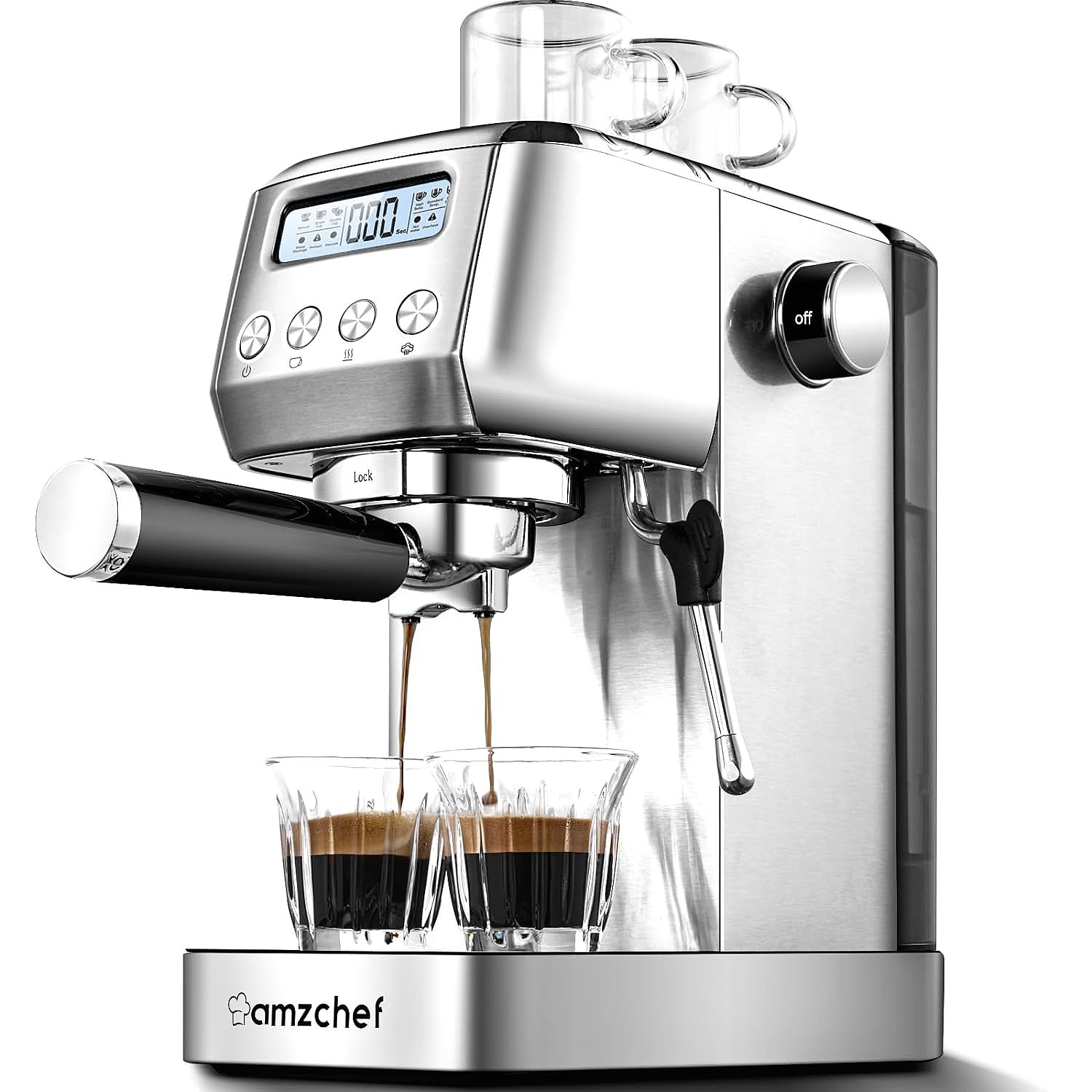
amzchef U-LL-1666SV 20 Bar Espresso Machine
Anyone who has pulled a shot of espresso right after steaming milk knows the disappointment: the coffee tastes scorched, hollow, and bitter. The crema collapses. The aroma flattens. What went wrong is not the beans or the grind -- it is the thermoblock. Single-block espresso machines, which dominate the sub-$200 market, use one heating element for both brewing and steaming. That design keeps costs and footprint down, but it creates a temperature gap that every user must learn to manage.
This is not a flaw unique to any one brand. Whether the machine sits on a counter under the amzchef label, the De'Longhi badge, or the Aercana name, the physics are identical. A thermoblock heated to approximately 130 degrees Celsius for steam production cannot instantly drop to the 93 degrees Celsius required for proper extraction. The water sitting inside that block is superheated, and if it hits coffee grounds before the system cools, the result is flash-boiling -- a violent, uneven extraction that destroys flavor.
Understanding why this happens, and more importantly what to do about it, separates frustrating mornings from consistently good espresso. The techniques described here apply to any single-block machine with a thermoblock or thermocoil heating system, though specific button sequences reference the amzchef U-LL-1666SV (model CM1666) as a concrete example.
The Physics of the Thermoblock
A thermoblock is a block of metal -- typically aluminum or stainless steel -- with internal channels carved through it. Water flows through these channels, absorbing heat from the surrounding metal as it passes. Unlike a traditional boiler, which heats a large volume of water and holds it at temperature, a thermoblock heats water on demand. This is why single-block machines preheat in roughly two minutes compared to the ten or fifteen minutes a boiler requires.
The trade-off is capacity. A small water volume inside the block means less thermal inertia. This is the defining characteristic of every espresso machine thermoblock design: speed at the expense of thermal stability. That is a feature when you want speed: turn the machine on, wait two minutes, brew. But it becomes a liability when you need to switch between brewing and steaming rapidly. The block does not have enough stored heat to maintain two different temperatures simultaneously.
This machine uses a 1350-watt heating element, which is above average for machines in its price range. Higher wattage means faster heat transfer into the water flowing through the block. This reduces preheat time and helps the block recover temperature more quickly between shots. But it also means the block gets hotter, faster -- which amplifies the temperature gap problem when switching from steam back to brew.
The 20-bar pump pressure is another specification worth understanding. Twenty bars refers to the water pressure pushed through the coffee puck, not the temperature of the water itself. The heating element and the pump are independent systems. You can have 20 bars of pressure with water that is too hot, too cold, or just right. The thermoblock controls temperature. The pump controls pressure. Both matter, but they operate on completely different physical principles.
The Temperature Gap: Why Steam Burns Your Shot
Here is the sequence that ruins espresso. You finish steaming milk. The thermoblock is at approximately 130 degrees Celsius. You turn the dial to brew. Fresh cold water from the tank enters the block, but it picks up heat from metal that is still far above the optimal 90-96 degree brewing range. The first few milliliters of water flash through the coffee grounds at temperatures approaching 110 degrees. The result is extraction at the wrong temperature -- bitter compounds dissolve that should never have entered your cup.
This is not theoretical. Thermal imaging studies of thermoblock espresso machines show that surface temperature recovery after steam mode takes between three and five minutes of idle cooling. The water inside the block cools faster than the metal housing, but not fast enough for immediate brewing. The gap between steam temperature (130 degrees) and brew temperature (93 degrees) is roughly 37 degrees. Bridging that gap without flushing cold water through the system is physically impossible in a single-block design.

The problem compounds when you consider the portafilter and group head. These metal components also absorb heat from the thermoblock during operation. A cold portafilter will drop brew water temperature by several degrees as it passes through. A portafilter that has been sitting next to a hot thermoblock will over-extract. This is why experienced users run a blank shot through the portafilter before brewing -- it brings the entire water path to equilibrium. The same principle applies to any espresso machine thermoblock: the entire water path, not just the block itself, must reach thermal equilibrium.
Temperature Surfing: A Step-by-Step Workflow
Temperature surfing is the practice of actively managing the thermoblock temperature gap through deliberate user intervention. It is not a feature built into any single-block machine. It is a technique that the user applies on top of the hardware. Here is the workflow that works reliably on this machine, and by extension on most single-block machines in this category.
Start with a cold machine. Turn it on and wait for the ready light -- approximately two minutes. The thermoblock reaches brewing temperature. Pull your first shot. The water path is cold and equilibrated, so the first shot is typically the cleanest.
After the shot, switch to steam mode. The thermoblock ramps to approximately 130 degrees. Steam your milk. When you are done, do not immediately switch back to brew. Switch to the hot water dispensing function instead. Run approximately 30-50 milliliters of water through the group head into the sink. This flushes the superheated water out of the block and replaces it with fresh cold water from the tank. The fresh water absorbs excess heat from the block walls, bringing the temperature down toward the brewing range.
Wait approximately 20-30 seconds after flushing. Then pull your next shot. The water path has been flushed, the portafilter has been cooled by the flush, and the thermoblock has shed enough excess heat to produce a clean extraction.
This workflow takes approximately four minutes between shots. It is slower than a dual-boiler machine, which can brew and steam simultaneously with zero transition time. But it produces consistent results on equipment that costs a fraction of the price. The key insight is that temperature surfing is not about waiting passively. It is about actively flushing the system to accelerate heat removal. The hot water function on machines like the amzchef U-LL-1666SV is not just a convenience feature for Americanos -- it is the primary tool for thermal management.
If your machine does not have a hot water function, the equivalent technique is to run a blank shot (water through the empty portafilter) instead. The principle is identical: flush superheated water out, bring fresh cold water through the block, wait briefly for equilibrium, then brew.
How Newer Machines Address the Problem
The thermoblock temperature gap has driven innovation in the sub-$200 segment over the past three years. Manufacturers have responded in two directions: improved thermal isolation and electronic temperature control.
De'Longhi's Classic Signature (model EM450M, priced at approximately $228) uses thermoblock technology but adds a more sophisticated heating algorithm. The machine's thermoblock design provides what De'Longhi describes as fast, precise, and stable temperature control. The mechanism is not fundamentally different from older designs -- it is still a single heating element with water flowing through channels. But the control electronics modulate power delivery more granularly, reducing temperature overshoot during mode transitions. The result is a smaller effective temperature gap, though not zero.
Aercana's 20 Bar machine (model available at approximately $100) takes a different approach. Its 1450-watt heating element heats faster than a typical 1350-watt element, reaching operating temperature in approximately 20 seconds. Faster heat-up means less time spent in transition states, which reduces the window where temperature management matters. But the fundamental physics remain unchanged: one block, two temperature targets, neither achievable simultaneously.
The industry trend is clear. Newer machines in this segment are adding features that make thermal management easier -- programmable presets, LCD interfaces, more powerful heating elements. But none of these features replace the fundamental understanding of what is happening inside the thermoblock. Every espresso machine thermoblock faces the same thermodynamic constraint: one heating element, two temperature targets. The hardware provides the tools. The user provides the technique.

Troubleshooting Hot Shots
Even with temperature surfing, problems occur. Here are the most common symptoms and their causes.
Bitter, harsh espresso after steaming. This is the classic symptom of insufficient flushing. You switched from steam to brew too quickly, and superheated water passed through the coffee grounds. Solution: extend the flush duration to 40-50ml and wait 30 seconds after flushing before pulling the next shot.
Sour, thin espresso on the first shot of the day. The machine and portafilter are cold. Water loses temperature as it passes through cold metal components. Solution: run a blank shot through the portafilter before brewing to bring the entire water path to temperature. Pre-warm your cup by rinsing it with hot water.
Inconsistent shots from the same recipe. The variable is almost always thermal. Small changes in ambient temperature, water temperature from the tank, or the timing between steam and brew modes all affect the final extraction temperature. Solution: establish a consistent workflow and stick to it. Time your flushes. Use the same water volume. The machine will reward consistency.
Steam wand produces wet, watery steam. The thermoblock has not reached full steam temperature. This can happen if you switched to steam mode immediately after brewing without allowing sufficient recovery time. The block is still near brew temperature (93 degrees) and needs time to ramp back to steam temperature (130 degrees). Solution: after brewing, wait 30-60 seconds before engaging steam mode. This wattage level helps, but thermal physics cannot be shortcut.
Portafilter burns your fingers. The group head and portafilter have absorbed significant heat from repeated brew-steam cycles. This is normal and indicates the metal components are doing their job -- conducting heat. Solution: use a portafilter handle with adequate insulation, or allow the group head to cool between heavy use sessions.
Maintaining Your Thermoblock: Longevity Tips
The thermoblock is the most critical component in a single-block espresso machine. Its failure typically means the machine is done. Proper maintenance extends its life significantly. The same principle applies to every espresso machine thermoblock: treat it as the heart of the system.
Descaling is the single most important maintenance task. Mineral deposits from hard water accumulate inside the thermoblock channels, reducing heat transfer efficiency. A block covered in scale takes longer to heat, heats unevenly, and can develop hot spots that damage the internal channels. Descale every one to three months depending on water hardness. Use a citric acid-based descaler rather than vinegar, which can leave residual odor in the water path.
Flush the thermoblock with fresh water after each use session. Run 100ml through the group head after your last shot. This clears coffee oils and fine particles from the water path before they can accumulate and insulate the block walls. Coffee oils are particularly problematic because they build up as a thin film inside the channels, reducing thermal conductivity over time.
Store the machine with the water tank empty if it will not be used for more than a week. Standing water in a warm thermoblock promotes mineral precipitation and bacterial growth. Empty the tank, run a short flush cycle, and store the machine dry.
Avoid running the machine dry. The thermoblock relies on continuous water flow to carry heat away from the heating element. If water flow stops -- due to an empty tank or a clogged filter -- the heating element continues generating heat with nothing to carry it away. This can damage the block's internal seals and, in extreme cases, warp the metal. Machines with over-heat protection will shut down automatically, but repeated thermal stress shortens component life.
Making Thermoblock Work for You
The single-block thermoblock design is a study in compromise. It sacrifices simultaneous brew-and-steam capability for affordability, speed, and compact size. Understanding that trade-off -- and learning to work with it -- is what separates good espresso from great espresso on a sub-$200 machine.
The temperature gap between brewing (93 degrees) and steaming (130 degrees) is not a defect. It is a physical reality of a single heating element trying to serve two masters. The solution is not to fight it but to manage it deliberately: flush between modes, wait for equilibrium, establish a consistent workflow.
Newer machines in this segment are adding features that make thermal management easier -- programmable presets, LCD interfaces, more powerful heating elements. But none of these features replace the fundamental understanding of what is happening inside the thermoblock. The hardware provides the tools. The user provides the technique.
The next time you pull a shot after steaming milk and it tastes perfect, remember: that is not luck. That is thermodynamics managed correctly. The water flushed through, the block cooled, the portafilter equilibrated. Every variable brought into alignment. That is thermal agility -- not a feature listed on a spec sheet, but a skill developed through understanding how the machine actually works.
amzchef U-LL-1666SV 20 Bar Espresso Machine
Related Essays

LUNYEE 3018 PRO MAX Setup: Software and First Cut

How Computerized Sewing Machine Technology Works: Rotary Hooks, Feed Systems, and Stepper Motor Precision

Dual-Feed Mechanisms and Microprocessor Stitch Control: The Engineering Behind Computerized Quilting Machines

AQUA CREST CF06A Water Filter Replacement Review (NSF Certified)
AQUA CREST CF06A Water Filter Replacement Review (NSF Certified)
AQUA CREST CF06A Water Filter Replacement Review (NSF Certified)
AQUA CREST CF06A Water Filter Replacement Review (NSF Certified)

How a Walking Foot Mechanism Works: The Engineering Behind Compound Feed Sewing

How Computerized Sewing Machine Technology Solves the Fabric Handling Problem for Professional Quilters
