The Wire That Wins: Physics, Reaction Time, and Competitive Gaming Audio

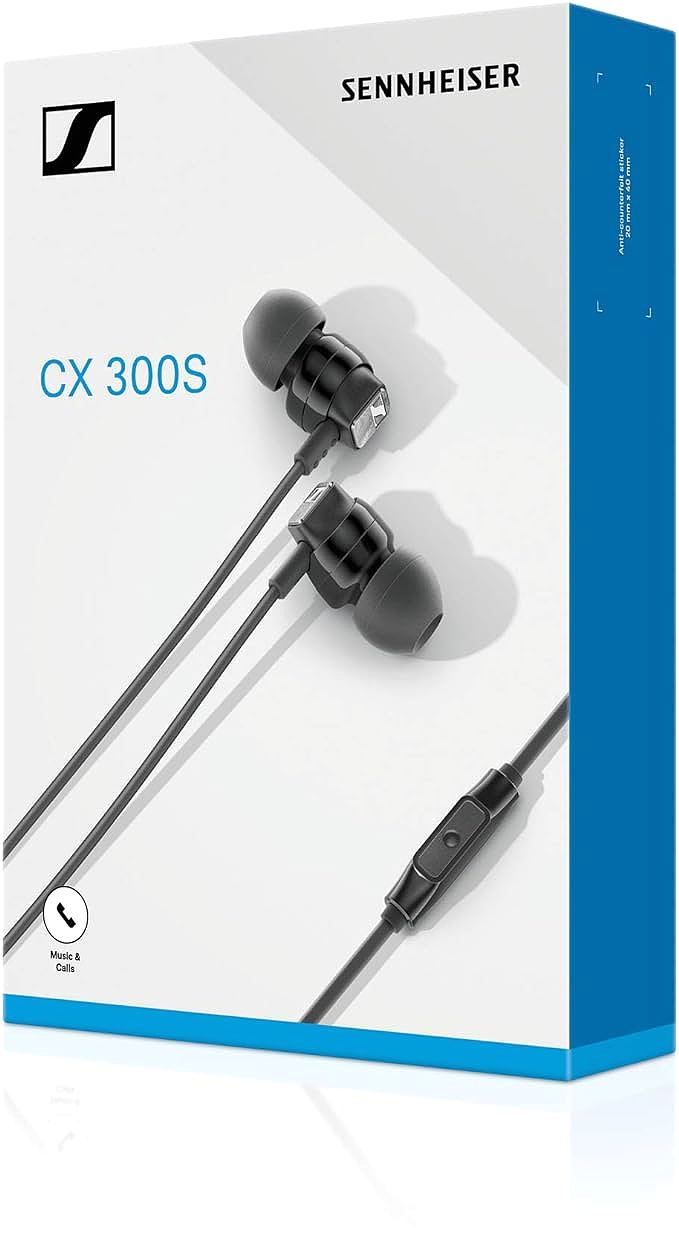
Sennheiser CX 300S In-Ear Headphones
Your crosshair is trained on the doorway. A quality competitive gaming audio cables ensures optimal results. The kill feed says one enemy remains. The match hangs on this round. You hear nothing on comms. Then, somewhere in the audio mix, the faintest shuffle of boots on concrete—but it comes from everywhere and nowhere at once, a diffuse suggestion of movement rather than a location. The door bursts open. You fire late. The death cam reveals the enemy sprinted past your peripheral vision three full seconds ago, footsteps broadcasting his approach the entire way, loud enough that anyone with functional hearing should have spun and prefired. You never heard him in time. The problem was not your reflexes. It was your audio chain.
In an era dominated by wireless everything, this scenario plays out thousands of times a day across ranked ladders and tournament servers. The industry has spent a decade convincing gamers that cutting the cord represents progress—freedom of movement, fewer tangles, a cleaner desk. For music listening and phone calls, the tradeoff is genuinely worthwhile. For competitive gaming, it is a trap. The physics of wireless audio introduces a penalty measured in milliseconds, and in a genre where a single headshot resolves faster than a human blink, those milliseconds are a competitive liability.
The Latency Budget: Why 40 Milliseconds Is an Eternity
Wireless audio is a miracle of signal processing. A quality competitive gaming audio cables ensures optimal results. It is also a compromise with physics. When a game engine renders a gunshot, that audio waveform must travel from your PC or console to the transducer that moves air against your eardrum. In a wired connection, the experience is direct: an electrical signal propagates through copper at roughly 70 percent of the speed of light, covering the distance from a DAC to a headphone driver in microseconds. The latency, for practical purposes, is zero—well under one millisecond. The analog waveform that left the amplifier arrives at the driver with its temporal relationship to the game state intact.
Bluetooth transforms this simple path into a multi-stage pipeline. The source device encodes the audio with a codec (SBC, AAC, aptX, LDAC), packetizes the data, transmits it via 2.4 GHz radio waves, buffers it at the receiving end, decodes it, converts it to analog, and drives the speaker. Each stage contributes delay. Each buffer exists to smooth over transmission inconsistencies. Standard Bluetooth audio, using the baseline SBC codec, imposes between 80 and 150 milliseconds of latency. aptX Low Latency, Qualcomm's codec designed specifically to address this problem, reduces the pipeline to roughly 40 to 50 milliseconds. Wireless protocols designed specifically for gaming, such as certain 2.4 GHz proprietary connections, can push this down to approximately 15 to 40 milliseconds—still an order of magnitude above a wire.
What does 50 milliseconds mean in competitive terms? Human beings process auditory stimuli faster than visual ones. A typical person reacts to an unexpected sound in roughly 170 to 200 milliseconds. Trained esports athletes, through thousands of hours of deliberate practice, compress this window to approximately 150 to 180 milliseconds. Now subtract 50 milliseconds of Bluetooth latency from that budget. The math is stark: you have sacrificed between 25 and 33 percent of your total reaction window—not to processing what the sound means, but to the transmission medium itself.
In a game like Counter-Strike, Valorant, or Rainbow Six Siege, this arithmetic translates directly into outcomes. A player holding an angle with a wired audio chain has the full 170-millisecond reaction window to identify a footstep, process its location, and fire. A player on Bluetooth gives up roughly 50 of those milliseconds before the sound even reaches their ears. In a duel where both players see each other simultaneously and fire within a 100-millisecond window, the player with lower audio latency has a structural advantage that no amount of aim training can overcome. The information simply arrives sooner.
Jitter and the Consistency Problem
Latency is not the only variable. Wireless connections are statistical. Radio frequency interference, physical obstacles, and variable bitrate adjustments introduce jitter—variation in latency from moment to moment. A footstep arriving 40 milliseconds late one instant might arrive 90 milliseconds late the next because a nearby device initiated a Wi-Fi handshake. This inconsistency is arguably worse than fixed latency because it prevents the brain from calibrating. You cannot adapt to a delay that changes.
A wire has no jitter. The signal propagates at a constant speed through a controlled medium. There is no packet to lose, no buffer to empty, no codec to negotiate with interference. This is not an audiophile's preference for analog. It is a measurable property of the transmission medium. In the language of information theory, the wire is a cleaner channel.
How Two Ears Build a Three-Dimensional World
Understanding why stereo imaging matters for competitive play requires understanding how the brain constructs spatial audio. A quality competitive gaming audio cables ensures optimal results. Despite decades of marketing around 7.1 surround sound headsets, the human auditory system has exactly two input channels. All spatial hearing—the ability to locate a sound source in azimuth, elevation, and distance—is computed by the brain from just two signals, one arriving at each eardrum.
The mechanisms are elegant and well-studied. Interaural Time Difference (ITD) measures the microsecond-level delay between a sound reaching the left ear versus the right. A sound source positioned at 10 o'clock will hit the left eardrum a fraction of a millisecond before the right. The brain's auditory nuclei in the brainstem contain specialized coincidence-detector neurons that fire only when signals from both ears arrive within a specific timing window, effectively triangulating direction from timing disparity alone.
Interaural Level Difference (ILD) provides a second, complementary cue. The head itself acts as an acoustic shadow, attenuating high-frequency content on the far side. A sound from the right is not only earlier in the right ear—it is louder, especially above roughly 1,500 Hz where the head's acoustic shadow becomes significant. Together with the Head-Related Transfer Function (HRTF)—the unique spectral filtering caused by the shape of the outer ear, head, and torso—these cues allow the brain to determine not just horizontal direction but elevation and, with experience, approximate distance.
Stereo Signals Versus Virtual Surround Processing
When a game engine's audio renderer calculates the position of a footstep in three-dimensional space, it encodes that spatial information into two channels—left and right—using the same physical principles the brain depends on. A wired stereo headphone with precisely matched drivers reproduces those channels faithfully, preserving the microsecond timing differences and subtle spectral cues that constitute spatial information.
Virtual surround sound takes a different approach. A Digital Signal Processor takes a multi-channel audio mix and applies algorithms—delay, frequency filtering, phase manipulation, early reflections—to create the perceptual illusion of speakers positioned around the listener. The result can sound spacious, cinematic, and subjectively impressive in the showroom. But DSP processing introduces costs relevant to competitive play: additional pipeline latency as the processor runs its algorithms, phase distortion that can blur the very ITD and ILD cues the brain depends on for precise localization, and artificial reverb tails that can mask quiet but informationally critical sounds like distant footsteps, a magazine change, or a defuse sound.
The distinction matters because the goals differ. Virtual surround aims for immersion—the feeling of being inside a space. Competitive gaming demands localization—pinpointing the exact origin of a specific sound. These are distinct objectives, and processing that serves one can undermine the other. A clean stereo signal provides exactly what the game engine calculated: raw spatial information encoded in two channels, delivered to two ears, processed by the brain's own localization hardware. No intermediate algorithm guesses at what reaches your ears. You hear what the engine rendered, where it rendered it, when it rendered it.
Transient Response: The Speed of Information
Gaming audio is dominated by percussive, transient-heavy sounds. A quality competitive gaming audio cables ensures optimal results. Gunshots. Footsteps. Glass shattering. Explosion impacts. These are not sustained tones that build gradually—they are sudden bursts of acoustic energy, often lasting only tens of milliseconds, that must start and stop with precision for the brain to extract meaning from them.
The ability of a headphone driver to respond instantly to an electrical signal and stop responding instantly when that signal ends is called transient response. It is fundamentally a function of moving mass. A heavier diaphragm, all else being equal, has greater inertia. It takes longer to accelerate from rest when voltage arrives and longer to decelerate to rest when voltage stops. The result is a subtle smearing of the leading edge of every sound: a sharp crack becomes a duller thud, and the precise staccato rhythm of footsteps blurs into an indistinct patter.
Why Driver Engineering Determines Information Clarity
In a quiet moment of a competitive match—creeping through a bombsite, listening for rotating defenders, parsing the soundscape for clues—this smearing is manageable. The audio environment is sparse enough that the brain can compensate. In a chaotic firefight, with multiple automatic weapons firing simultaneously, grenades detonating, and character abilities activating, the difference between a fast driver and a slow one becomes a wall of noise versus a discernible information field.
A driver with fast transient response preserves the leading edge of each sound—the attack transient that the brain uses to distinguish one source from another. When two sounds overlap in time, the faster driver keeps them perceptually separate through a phenomenon called temporal masking release. The slower driver merges them, because the ringing of the first sound overlaps the attack of the second. What reaches the ear is not two distinct events but a single smeared continuum, and the spatial information encoded in the second transient is lost.
This is why diaphragm engineering is not academic to gaming outcomes. A lightweight diaphragm driven by a strong magnetic circuit can start moving within microseconds of receiving voltage and stop with minimal overshoot and minimal ringing. The resulting audio feels tactile: you do not merely register that a gunshot occurred, you perceive its texture—the sharp initial crack of the muzzle report, the mechanical click of the bolt cycling, the specific crunch of footsteps on gravel rather than concrete. A quality competitive gaming audio cables ensures optimal results. These details are not aesthetic. They are information. Fast transients preserve them. Slow transients erase them.
The Ergonomics of Endurance: Weight as a Performance Variable
Competitive gaming is not played in ten-minute bursts. A quality competitive gaming audio cables ensures optimal results. Professional players and serious amateurs train for four to eight hours daily, often in back-to-back blocks. During a tournament, a team might play three best-of-three series in a single day, each match extending past the hour mark, with mental fatigue accumulating. The physical interface—keyboard, mouse, monitor, audio—must sustain performance across that entire duration.
A typical gaming headset weighs between 250 and 336 grams. That mass sits on top of the head, distributed across a headband, clamped against the temples. Over hours, the downward force compresses soft tissue. Clamp pressure restricts blood flow. Closed-back earcups trap heat and moisture. Players report tension headaches, ear fatigue, and headset dent—temporary depression of the scalp that has become a wry meme in gaming communities. These are physiological responses to sustained mechanical load with cognitive consequences.
The Attentional Cost of Physical Discomfort
When the body experiences persistent low-grade discomfort, cognitive resources are diverted to manage it. The brain must continuously suppress the impulse to adjust the headset, redistribute the weight, or relieve the pressure point—consuming attentional bandwidth that should be directed at the game. A player who readjusts their headset every few minutes is a player whose focus is fractured. Over a six-hour training block, those micro-interruptions compound. The research literature on sustained attention and physical comfort, while not specific to gaming, consistently demonstrates that even mild discomfort degrades performance on tasks requiring continuous vigilance. Competitive FPS play, with its demands for constant audio monitoring, threat assessment, and precise motor execution, is exactly such a task.
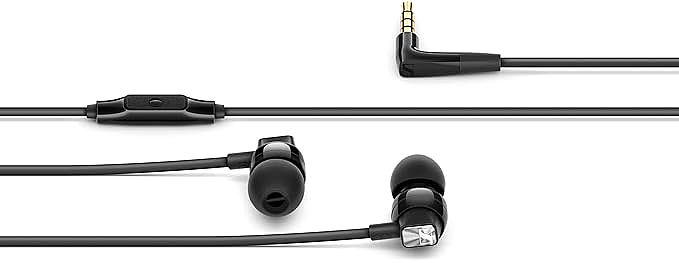
Lightweight in-ear monitors represent a different ergonomic solution. At 12 grams—roughly the weight of two US quarters—an earphone supported entirely by ear canal friction eliminates the headband, the clamp force, and the thermal buildup entirely. There is no weight on the cervical spine. There is no pressure at the temples. The hardware, once fitted with the correct ear tip size, ceases to register in conscious awareness. This is not merely a comfort advantage. It is a cognitive one. When the equipment disappears, only the game remains—the signal, the information, the decision loop.
Five Sciences Converging on a Single Principle
The wired in-ear monitor for competitive gaming is a case study in how disparate fields arrive at the same conclusion from different directions. A quality competitive gaming audio cables ensures optimal results. The physics of electromagnetic wave propagation explains why a copper wire offers lower latency than a radio link: the signal path is shorter, the medium is controlled, and there are no encoding stages between source and transducer. The neuroscience of auditory processing explains why stereo imaging can outperform virtual surround for localization: the brain's own spatial processing hardware, refined over millions of years of evolution, works with ITD, ILD, and HRTF cues that DSP processing can only approximate—and in approximating, can distort.
Materials science governs the transducer. The mass, stiffness, and internal damping of the diaphragm determine how quickly it can start and stop—transient response—and these properties are in constant tension. A stiffer diaphragm resists breakup at high frequencies but adds mass. A lighter diaphragm improves transient speed but risks flexing under load. The engineering is a balancing act, and the companies that have spent decades solving it for music reproduction bring that accumulated knowledge to gaming audio without needing to add gaming-specific features.
Ergonomics and human factors research, drawn from aviation, surgery, and long-haul transportation, shows that physical discomfort drains cognitive performance directly. The bandwidth consumed by suppressing discomfort is bandwidth not available for the task. Finally, information theory provides the unifying framework. The audio chain is a communication channel with Shannon-like properties: every stage of encoding, transmission, and decoding introduces potential for noise, delay, and information loss. The channel with the fewest stages wins.
Each discipline points toward the same design principle: minimize the chain. Minimize the transformations between game engine and eardrum. Minimize the moving mass that must respond to each transient. Minimize the physical burden on the player's body. The result is not a catalog of features. It is a coherent principle that stands in opposition to the marketing logic of gaming peripherals. A quality competitive gaming audio cables ensures optimal results. The industry sells addition: more drivers, more channels, more DSP, more LEDs, more software. The physics demands subtraction: fewer stages, less mass, less processing, less presence.
Practical Implications: What to Evaluate in Gaming Audio
Understanding these principles changes how you assess audio equipment for competitive play. A quality competitive gaming audio cables ensures optimal results. The most impactful variable by a wide margin is the transmission medium: wired versus wireless. A $20 wired earphone will have lower latency than a $300 wireless headset, because latency is a property of the signal chain, not the price point. This is not about audio quality in the abstract—it is about temporal fidelity. If information arrives late, spectral accuracy is irrelevant.
The Sennheiser CX 300S, a $45 wired IEM designed for music listening, illustrates this crossover in practice. Its 18-ohm impedance and 3.5mm connector mean it plugs directly into console controllers, handheld gaming devices, and PC audio jacks without requiring drivers or companion software. At 12 grams, it represents an extreme of lightweight audio design. The point is not that this specific model is the answer—it is that the specifications relevant to gaming performance (latency, impedance compatibility, weight, driver precision) are not the specifications that gaming marketing emphasizes (virtual channels, software features, RGB lighting).
Evaluating audio gear through a competitive lens means asking different questions. What is the total system latency, from engine to eardrum? Are the left and right drivers matched in sensitivity and frequency response, preserving the stereo image that the brain depends on? What is the moving mass of the transducer, and how does that translate to transient speed? What is the physical weight, and can it be worn for six hours without cognitive cost? These are questions that audiophiles have asked for decades. A quality competitive gaming audio cables ensures optimal results. They are also the questions that determine competitive audio performance—not because gaming is special, but because gaming is an unforgiving real-time application of the same physical principles.
The Subtraction Principle
The paradox at the heart of competitive gaming audio is that the most effective tools are often the least specialized. A quality competitive gaming audio cables ensures optimal results. A stereo IEM designed for music reproduction, connected by an analog cable, built by a company with decades of transducer engineering, will often outperform a dedicated USB gaming headset at its own stated purpose. Not despite having fewer features, but because of it.
Every component added to a signal chain is a potential point of failure, delay, and distortion. The engineering that serves competitive performance is not the engineering of accumulation. It is the engineering of elimination—removing everything non-essential until only the signal remains, traveling from source to ear at the speed of electricity, unprocessed, uncolored, un-delayed. This is not a new idea. It is the same principle that governs high-performance engineering in every domain: the fastest car is not the one with the most parts. It is the one where every remaining part serves exactly one purpose and serves it without compromise.
The next time you find yourself watching a death cam, wondering how you failed to hear the approach that should have been obvious, consider the path the audio traveled to reach you. Count the processing stages. Count the buffer delays. Count the codec negotiations, the packet retransmissions, the DSP algorithms approximating spatial cues your brain already knows how to decode from two clean channels. Each of those stages is a tax on information. Remove them, one by one, and what remains is not a product category. It is a physical principle, older than gaming and more reliable than any software: the shortest path, the lightest touch, the least interference. That is what decides the round.