The Standard of Utility: Bluetooth 5.1 and the Economics of Battery Life

BJ J8 Wireless Earbuds
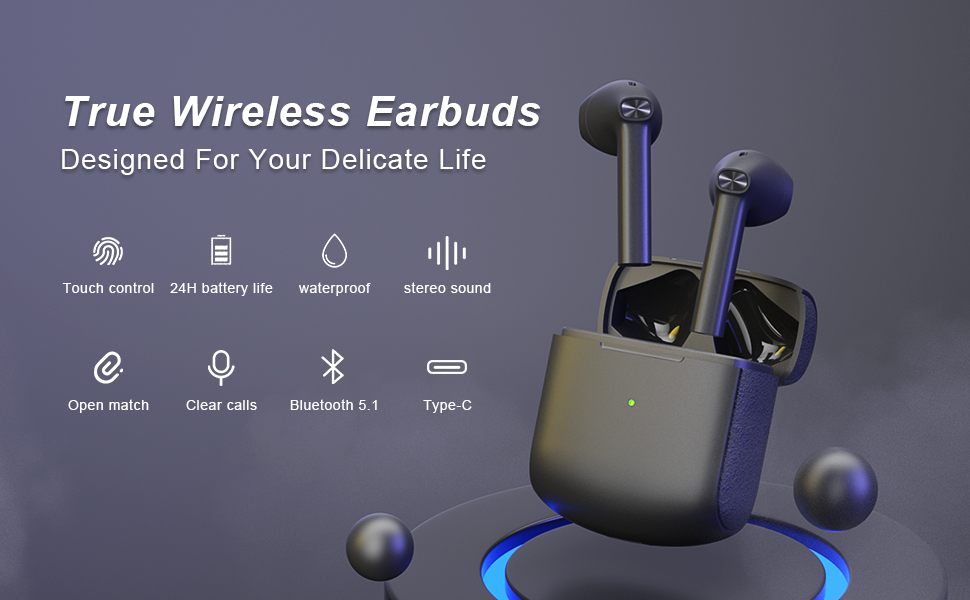
In the rapid cycle of consumer electronics, specifications are often treated as a scorecard: higher numbers are always better. However, engineering is the art of optimization, not just maximization. A device like the BJ J8 Wireless Earbuds, with Bluetooth 5.1, IPX5 waterproofing, and 24-hour total battery life, represents a pragmatic calibration of features to real-world needs.\r\n\r\nThis article explores the utility of these standards. We will look beyond the version numbers to understand how Bluetooth 5.1 improves upon its predecessors, what IPX5 actually protects against in a physics context, and how modern battery management creates a seamless \"always-ready\" experience.\r\n\r\n## Bluetooth 5.1: The Invisible Umbilical\r\n\r\nBluetooth is the invisible cable of the modern age. The jump from Bluetooth 4.2 to 5.0 was revolutionary (speed and range), but the refinement to Bluetooth 5.1 brings subtle yet critical improvements to the user experience, particularly in pairing and stability.\r\n\r\n### The Handshake: GATT Caching\r\nOne of the most frustrating aspects of early wireless audio was the slow connection time. Bluetooth 5.1 introduces improvements to GATT (Generic Attribute Profile) Caching.\r\nIn older versions, every time devices connected, they had to negotiate and \"discover\" each other's services (battery level, volume control, audio capabilities). This took time and energy. With Bluetooth 5.1, devices can \"remember\" the attribute table of trusted peers. This skips the discovery phase, allowing for the \"One-step Pairing\" claimed by the J8. When you open the case, the connection is re-established almost instantly because the negotiation is already cached.\r\n\r\n### Navigating the Spectrum: Adaptive Frequency Hopping\r\nThe 2.4 GHz band where Bluetooth operates is a battlefield, crowded with Wi-Fi signals, microwaves, and other Bluetooth devices. To survive, the BJ J8 uses Adaptive Frequency Hopping (AFH).\r\nThe signal hops between 40 channels (in BLE mode) or 79 channels (in Classic mode) thousands of times per second. Bluetooth 5.1 improves the algorithm for detecting \"bad\" channels (those with high interference) and avoiding them. This ensures \"no entanglement\" and stable transmission even in a gym full of people using wireless devices. It is this algorithmic agility that allows for \"High Fidelity Sound\" without the stuttering that plagued early wireless buds.\r\n\r\n \r\n\r\n## The Physics of Protection: Decoding IPX5\r\n\r\nThe BJ J8 carries an IPX5 waterproof rating. To the uninitiated, this might seem inferior to the IPX7 or IPX8 found on flagship models. However, in the context of a sports earbud, IPX5 is often the engineering \"sweet spot.\"\r\n\r\n### Jets vs. Immersion\r\nThe IP (Ingress Protection) scale is not strictly linear.\r\n IPX7 tests for immersion (static pressure underwater).\r\n IPX5 tests for water jets (dynamic pressure from a nozzle).\r\nSpecifically, IPX5 means the device can withstand water projected by a 6.3mm nozzle from any direction at a rate of 12.5 liters per minute. This simulates heavy rain or a direct splash from a water bottle.\r\nFor a runner or gym-goer, the primary threat is not falling into a swimming pool (immersion); it is sweat dripping down the head or getting caught in a downpour. Sweat and rain behave more like low-pressure jets than static submersion. Therefore, the sealing required for IPX5\u2014tight gaskets and hydrophobic meshes\u2014is perfectly tuned to \"prevent any penetration from splash and sweat\" without the added cost and acoustic compromises sometimes required for full IPX7/8 waterproofing (which can require thicker membranes that damp sound).\r\n\r\n### The Sweat Factor\r\nSweat is more dangerous than water because of its salt content. Saline solution is highly conductive and corrosive. The \"sweatproof design\" of the J8 likely involves internal conformal coatings on the PCB (Printed Circuit Board) to prevent dendritic growth (short circuits caused by metal migration) if any moisture does penetrate the outer seal.\r\n\r\n## The Economics of Energy: Lithium-Ion and USB-C\r\n\r\nThe J8 offers 6.5 hours of listening time on a single charge, with the case extending this to 24 hours. This endurance is a function of battery density and power efficiency.\r\n\r\n### Energy Density and Form Factor\r\nThe earbuds likely contain tiny button-cell Lithium-Ion batteries. These cells have high energy density, allowing them to power the Bluetooth radio and driver for hours while weighing only a few grams. The \"Super Lightweight\" design (48g total) is achievable because Li-Ion chemistry maximizes the power-to-weight ratio.\r\nThe 6.5-hour figure is significant because it exceeds the duration of almost any continuous human activity (a marathon, a study session, a flight). The need for >10 hours in a single bud is a niche use case; 6.5 hours covers the 99th percentile of daily use.\r\n\r\n### USB-C: The Universal Port\r\nThe inclusion of a Type-C charging port is a nod to modern infrastructure.\r\n Reversibility: Reduces mechanical wear on the port, increasing longevity.\r\n Power Negotiation: USB-C allows the case to communicate with the charger, ensuring the correct current is drawn. The \"Charging time only 1 hour\" suggests an efficient charging circuit that can safely handle higher currents (likely 1A or more) to rapidly top up the battery cells without overheating them.\r\n\r\n
 \r\n\r\n## Conclusion: The Engineering of \"Enough\"\r\n\r\nThe BJ J8 Wireless Earbuds are a testament to the maturation of audio technology. They do not aim to break records with 100-hour batteries or deep-ocean waterproofing. Instead, they aim for utility.\r\n\r\nBy utilizing Bluetooth 5.1, they ensure the connection is stable enough that the user forgets it's wireless. By achieving IPX5, they ensure the device survives the actual hazards of an active life (sweat/rain) without over-engineering for unlikely scenarios (swimming). By balancing battery size with weight, they provide \"all-day\" power in a package that is comfortable to wear. This is the essence of good product design: solving real problems with appropriate, reliable technologies.
Beyond SBC: LE Audio and the LC3 Codec
Bluetooth audio quality has historically been constrained not by the radio link, but by the codec used to compress audio before transmission. The default codec for decades has been SBC (Low Complexity Subband Codec), mandated by the Bluetooth specification for basic interoperability. SBC works, but its compression algorithm was designed in the late 1990s -- an era of limited processing power and narrow bandwidth. The result is a perceptual trade-off: at moderate bitrates, SBC introduces audible artifacts, particularly in high-frequency detail and transient response (the sharp attack of a drum hit or a cymbal crash).
Bluetooth 5.1 devices that support LE Audio introduce the LC3 codec (Low Complexity Communications Codec) as a modern replacement. LC3 achieves equivalent perceptual quality to SBC at roughly half the bitrate. This is not a marginal improvement -- it is a fundamental shift in the efficiency curve. At 96 kbps, LC3 delivers transparency comparable to SBC at 192 kbps. For the user, this means two things: better audio fidelity from the same wireless connection, and lower power consumption because the radio spends less time transmitting data.
Why does this matter for a device like the BJ J8? Even if the earbuds use Classic Audio (A2DP) rather than LE Audio, the trajectory of the standard matters. The LC3 codec represents a design philosophy shift: prioritize bit-efficient quality over brute-force bandwidth. As firmware updates and future chipset revisions propagate, the J8's Bluetooth 5.1 radio is already capable of negotiating these efficiency gains. This is the economics of energy applied to data -- every bit not transmitted is a bit not paid for in battery drain.

Range Reality: The Gap Between Specification and Environment
Bluetooth 5.0 introduced a theoretical 4x range increase over Bluetooth 4.2, extending the nominal outdoor range to approximately 240 meters (800 feet) under ideal conditions. Bluetooth 5.1 inherits this physical layer capability. However, the real-world range of any Bluetooth link is determined less by the version number on the box and more by three environmental variables: path loss, absorption, and interference.
Path loss follows the inverse-square law: signal power drops proportional to the square of distance. In an open field with line-of-sight, this is predictable. Indoors, the signal encounters walls, floors, and furniture, each acting as an attenuator. Drywall attenuates by approximately 3-5 dB per sheet; concrete by 10-15 dB; human bodies (which are mostly water) by 10-20 dB. The BJ J8 earbuds, worn on the head with the phone in a pocket, must transmit through the user's own body -- a significant attenuation obstacle. This is why the reliable range in practice is typically 10-20 meters, not 240.
Absorption varies by frequency within the 2.4 GHz band. Bluetooth channels near 2.48 GHz experience more atmospheric attenuation than those near 2.40 GHz, though the difference is small at typical earbud distances. More relevant is multipath fading: signals bounce off surfaces and arrive at the receiver at slightly different times, causing phase cancellation that can drop the signal entirely even when the device is only meters away. Adaptive Frequency Hopping (AFH) in Bluetooth 5.1 mitigates this by rapidly switching channels when packet loss exceeds a threshold, but it cannot eliminate physics.
Understanding this gap between theoretical and actual range reframes the Bluetooth 5.1 specification not as a promise of kilometer-long links, but as a robustness margin. The extra range headroom translates directly into connection stability at normal usage distances. When the J8 is in your pocket and you walk into another room, the link does not break immediately -- because the system is operating well within its link budget, not at its ragged edge.
Direction Finding: AoA and AoD in Practice
Perhaps the most technically significant addition in Bluetooth 5.1 is the native support for direction finding, implemented through two complementary methods: Angle of Arrival (AoA) and Angle of Departure (AoD). While not directly related to audio playback, this capability reshapes what a Bluetooth earbud can know about its physical environment.
The principle relies on antenna arrays and phase difference measurement. A Bluetooth 5.1 transmitter (or receiver) with multiple antennas can measure the phase offset of an incoming signal across those antennas. Because the speed of light is constant and the antenna spacing is known, the phase difference translates mathematically into an angle of incidence. AoA places the antenna array on the receiver side (the phone or the earbuds); AoD places the array on the transmitter side (a beacon or access point).
Practical accuracy under optimal conditions reaches 5-10 degrees, sufficient to determine which room a device is in, or whether the user is facing toward or away from a paired device. For wireless earbuds, direction finding enables a "find my earbuds" feature with genuine spatial awareness -- not just a signal strength bar, but a bearing. The BJ J8's support for Bluetooth 5.1 means the hardware is capable of this, should the firmware and companion application implement it.
More broadly, AoA/AoD transforms Bluetooth from a simple communication link into a spatial sensing technology. In the same way that Wi-Fi RTT (Round Trip Time) enables indoor positioning at meter-level accuracy, Bluetooth 5.1 direction finding adds angular resolution to distance estimation. For a product designed for an active lifestyle -- gym, commute, outdoor runs -- this means the earbuds are not just passive audio transducers but active participants in spatial awareness, capable of triggering context-dependent actions based on proximity and orientation.\r\n\r\n---
Beyond SBC: LE Audio and the LC3 Codec
Bluetooth audio quality has historically been constrained by the codec, not the radio link. The default codec for decades has been SBC (Low Complexity Subband Codec), designed in the late 1990s. At moderate bitrates, SBC introduces audible artifacts, particularly in high frequencies and transient response.
Bluetooth 5.1 devices that support LE Audio introduce the LC3 codec (Low Complexity Communications Codec) as a modern replacement. LC3 achieves equivalent perceptual quality to SBC at roughly half the bitrate. At 96 kbps, LC3 delivers transparency comparable to SBC at 192 kbps. For the user, this means better audio fidelity and lower power consumption -- the radio spends less time transmitting data. This is the economics of energy applied to the data layer: every bit not transmitted is a bit not paid for in battery drain.
Range Reality: Specification vs. Environment
Bluetooth 5.1 inherits the 240-meter theoretical outdoor range from Bluetooth 5.0. However, real-world range is determined by path loss, absorption, and interference. Drywall attenuates by 3-5 dB per sheet, concrete by 10-15 dB, and the human body (mostly water) by 10-20 dB. The BJ J8 earbuds, worn on the head with the phone in a pocket, must transmit through the user's own body, which is why reliable range in practice is typically 10-20 meters.
Multipath fading compounds this: signals bounce off surfaces and arrive at slightly different times, causing phase cancellation that can drop the signal at short distances. Adaptive Frequency Hopping (AFH) in Bluetooth 5.1 mitigates this by switching channels when packet loss exceeds a threshold. The specification is best understood not as a promise of extreme range, but as a robustness margin -- the extra headroom ensures stability at normal distances.
Direction Finding: AoA and AoD
Perhaps the most technically significant addition in Bluetooth 5.1 is native support for direction finding, implemented through Angle of Arrival (AoA) and Angle of Departure (AoD). The principle relies on antenna arrays measuring phase offsets across multiple elements. Because the speed of light is constant and antenna spacing is known, the phase difference translates into an angle of incidence with 5-10 degree accuracy under optimal conditions.
This transforms Bluetooth from a communication link into a spatial sensing technology. For wireless earbuds, it enables a "find my earbuds" feature with genuine spatial awareness -- not just a signal strength bar, but a bearing. For an active-lifestyle product like the BJ J8, AoA/AoD means the earbuds become capable of triggering context-dependent actions based on proximity and orientation.