The Invisible Pacer: Psychoacoustics and the Flow State in Endurance Sports
Update on Jan. 2, 2026, 8:36 a.m.
For the endurance athlete, the battle is often more mental than physical. At mile 20 of a marathon or hour 4 of a trail run, the legs may still have glycogen, but the mind is screaming to stop. In these critical moments, athletes often turn to an invisible performance enhancer: sound.
The relationship between music and athletic performance is well-documented, with some researchers famously calling music “a legal drug” for athletes. But how exactly does sound influence physiology? And what role does the hardware—the earbuds delivering the sound—play in maintaining the delicate psychological state known as “flow”? To understand this, we must delve into the realm of psychoacoustics.

The Bass Response: Synchronizing the Engine
Humans are rhythmically entrained creatures. Our motor cortex—the part of the brain that controls movement—has a direct neural connection to the auditory cortex. This is why we tap our feet to a beat without thinking. In running, this phenomenon is critical.
Lowering Perceived Exertion
Studies have shown that listening to music with a prominent, driving beat can lower the Rate of Perceived Exertion (RPE). Essentially, the music distracts the brain from the signals of fatigue coming from the muscles. But not all frequencies are created equal. Low frequencies—bass—are particularly effective at driving rhythmic movement. They provide a visceral, physical “thump” that can serve as a metronome for cadence.
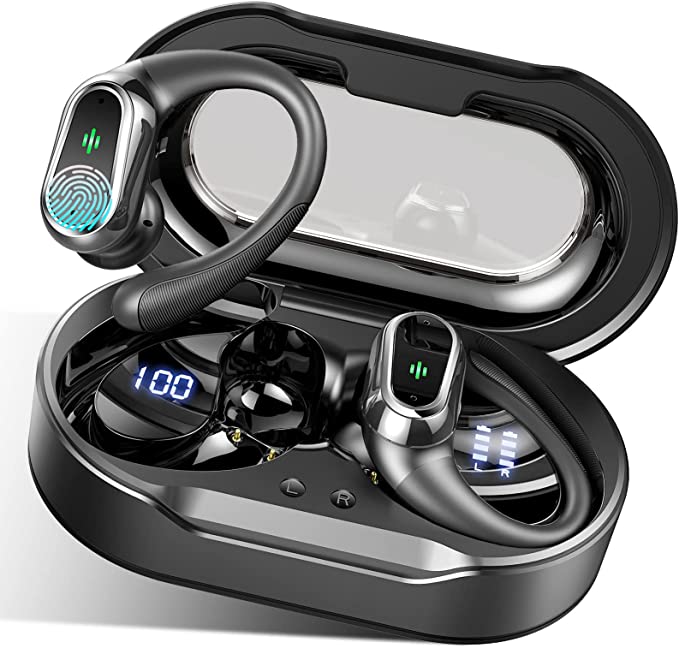
This is why features like the “Bass Mode” found on the Back Bay Audio Runner 60 are not just for audiophiles; they are performance tools. By boosting the lower frequencies, the device emphasizes the rhythmic structure of the music, making it easier for the runner to lock their stride to the beat. This synchronization improves running economy, making every step slightly more efficient.
The Fragility of “Flow”
In psychology, “flow” is a state of complete immersion and focus. For a runner, it is that magical period where the miles seem to disappear, and running feels effortless. Flow is powerful, but it is also fragile. It can be shattered by the slightest distraction: a loose shoe, a chafing strap, or—most disastrously—a “Low Battery” warning.
The Cost of Interruption
When technology fails mid-workout, the athlete is jolted out of the flow state. The focus shifts from the run to the annoyance of the equipment. This is why battery life is a critical metric for endurance gear. It is not just about convenience; it is about reliability.
A device that offers an immense power reserve, such as the 80-hour total playtime of the Runner 60 system, provides a psychological safety net. It removes “energy anxiety” from the athlete’s cognitive load. Knowing that your gear has weeks of charge means you never have to hesitate before grabbing them for a run. It ensures that the music—and the flow state it supports—remains an unbroken constant.

Cognitive Load and Simplicity
Endurance sports require immense mental fortitude. Athletes strive to minimize “cognitive load”—the amount of mental processing power used for non-essential tasks. Every decision made during a run (How fast? Which turn? Is my battery dying?) saps mental energy that could be used for physical output.
Long-battery life devices contribute to cognitive offloading. Because the user rarely has to charge the case, the act of charging becomes a monthly ritual rather than a daily chore. The equipment becomes “invisible” in the logistical planning of the workout. This simplicity is the ultimate sophistication in sports technology. The best gear is the gear you don’t have to think about.
Conclusion: The Soundtrack of Persistence
As we push the limits of human endurance, the tools we use must evolve to support us. Audio is no longer just entertainment; it is a pacer, a motivator, and a modulator of pain.
By combining specific acoustic tuning (like bass enhancement) with extreme reliability (massive battery life), modern sport earbuds like the Back Bay Audio Runner 60 act as a catalyst for human potential. They ensure that when the wall hits, and the body wants to quit, the beat goes on—driving the athlete forward, one step at a time.