The Standard of Utility: Bluetooth 5.1 and the Economics of Battery Life
Update on Jan. 2, 2026, 8:23 a.m.
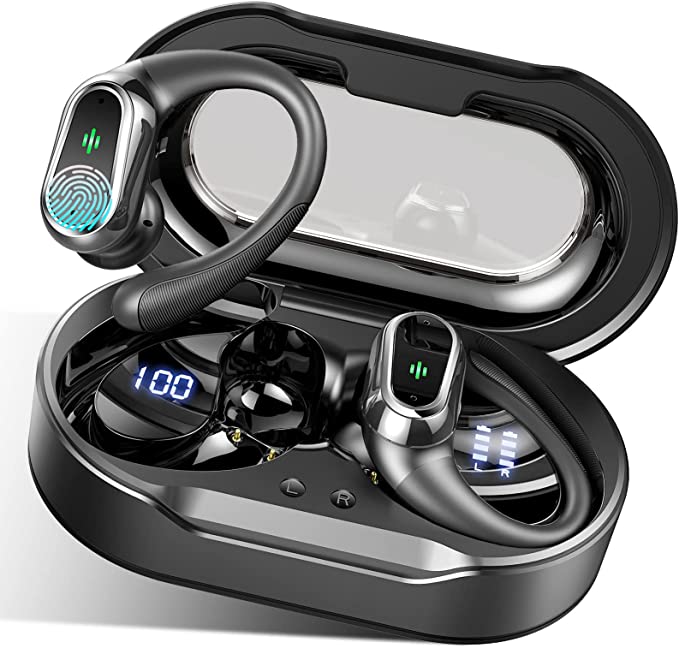
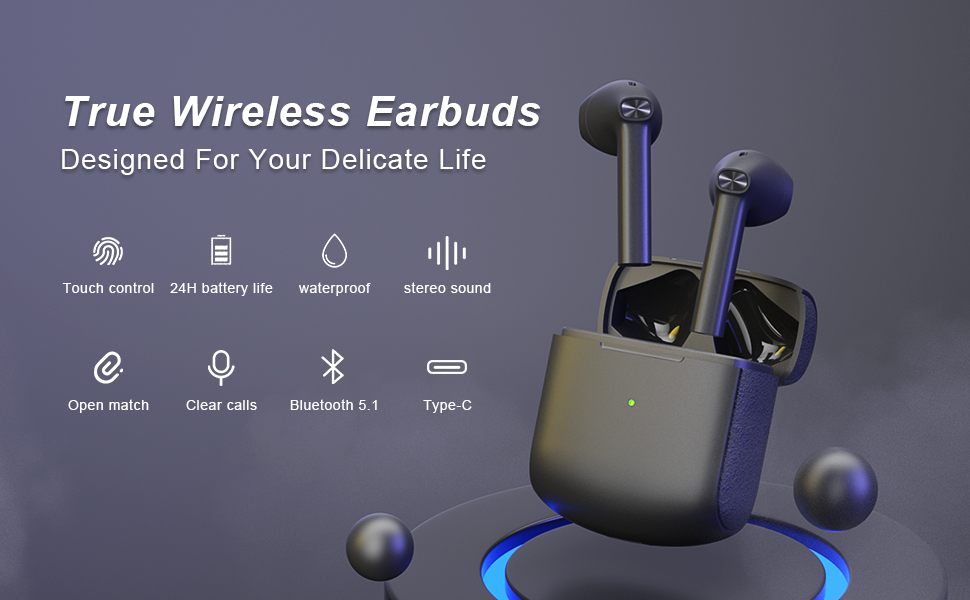
In the rapid cycle of consumer electronics, specifications are often treated as a scorecard: higher numbers are always better. However, engineering is the art of optimization, not just maximization. A device like the BJ J8 Wireless Earbuds, with Bluetooth 5.1, IPX5 waterproofing, and 24-hour total battery life, represents a pragmatic calibration of features to real-world needs.
This article explores the utility of these standards. We will look beyond the version numbers to understand how Bluetooth 5.1 improves upon its predecessors, what IPX5 actually protects against in a physics context, and how modern battery management creates a seamless “always-ready” experience.
Bluetooth 5.1: The Invisible Umbilical
Bluetooth is the invisible cable of the modern age. The jump from Bluetooth 4.2 to 5.0 was revolutionary (speed and range), but the refinement to Bluetooth 5.1 brings subtle yet critical improvements to the user experience, particularly in pairing and stability.
The Handshake: GATT Caching
One of the most frustrating aspects of early wireless audio was the slow connection time. Bluetooth 5.1 introduces improvements to GATT (Generic Attribute Profile) Caching.
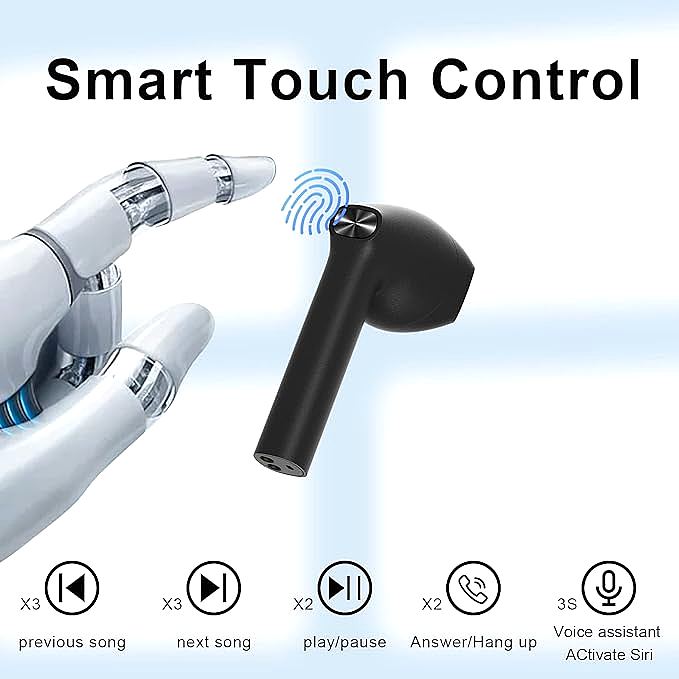
In older versions, every time devices connected, they had to negotiate and “discover” each other’s services (battery level, volume control, audio capabilities). This took time and energy. With Bluetooth 5.1, devices can “remember” the attribute table of trusted peers. This skips the discovery phase, allowing for the “One-step Pairing” claimed by the J8. When you open the case, the connection is re-established almost instantly because the negotiation is already cached.
Navigating the Spectrum: Adaptive Frequency Hopping
The 2.4 GHz band where Bluetooth operates is a battlefield, crowded with Wi-Fi signals, microwaves, and other Bluetooth devices. To survive, the BJ J8 uses Adaptive Frequency Hopping (AFH).
The signal hops between 40 channels (in BLE mode) or 79 channels (in Classic mode) thousands of times per second. Bluetooth 5.1 improves the algorithm for detecting “bad” channels (those with high interference) and avoiding them. This ensures “no entanglement” and stable transmission even in a gym full of people using wireless devices. It is this algorithmic agility that allows for “High Fidelity Sound” without the stuttering that plagued early wireless buds.
The Physics of Protection: Decoding IPX5
The BJ J8 carries an IPX5 waterproof rating. To the uninitiated, this might seem inferior to the IPX7 or IPX8 found on flagship models. However, in the context of a sports earbud, IPX5 is often the engineering “sweet spot.”
Jets vs. Immersion
The IP (Ingress Protection) scale is not strictly linear.
* IPX7 tests for immersion (static pressure underwater).
* IPX5 tests for water jets (dynamic pressure from a nozzle).
Specifically, IPX5 means the device can withstand water projected by a 6.3mm nozzle from any direction at a rate of 12.5 liters per minute. This simulates heavy rain or a direct splash from a water bottle.
For a runner or gym-goer, the primary threat is not falling into a swimming pool (immersion); it is sweat dripping down the head or getting caught in a downpour. Sweat and rain behave more like low-pressure jets than static submersion. Therefore, the sealing required for IPX5—tight gaskets and hydrophobic meshes—is perfectly tuned to “prevent any penetration from splash and sweat” without the added cost and acoustic compromises sometimes required for full IPX7/8 waterproofing (which can require thicker membranes that damp sound).
The Sweat Factor
Sweat is more dangerous than water because of its salt content. Saline solution is highly conductive and corrosive. The “sweatproof design” of the J8 likely involves internal conformal coatings on the PCB (Printed Circuit Board) to prevent dendritic growth (short circuits caused by metal migration) if any moisture does penetrate the outer seal.
The Economics of Energy: Lithium-Ion and USB-C
The J8 offers 6.5 hours of listening time on a single charge, with the case extending this to 24 hours. This endurance is a function of battery density and power efficiency.
Energy Density and Form Factor
The earbuds likely contain tiny button-cell Lithium-Ion batteries. These cells have high energy density, allowing them to power the Bluetooth radio and driver for hours while weighing only a few grams. The “Super Lightweight” design (48g total) is achievable because Li-Ion chemistry maximizes the power-to-weight ratio.
The 6.5-hour figure is significant because it exceeds the duration of almost any continuous human activity (a marathon, a study session, a flight). The need for >10 hours in a single bud is a niche use case; 6.5 hours covers the 99th percentile of daily use.
USB-C: The Universal Port
The inclusion of a Type-C charging port is a nod to modern infrastructure. * Reversibility: Reduces mechanical wear on the port, increasing longevity. * Power Negotiation: USB-C allows the case to communicate with the charger, ensuring the correct current is drawn. The “Charging time only 1 hour” suggests an efficient charging circuit that can safely handle higher currents (likely 1A or more) to rapidly top up the battery cells without overheating them.
Conclusion: The Engineering of “Enough”
The BJ J8 Wireless Earbuds are a testament to the maturation of audio technology. They do not aim to break records with 100-hour batteries or deep-ocean waterproofing. Instead, they aim for utility.
By utilizing Bluetooth 5.1, they ensure the connection is stable enough that the user forgets it’s wireless. By achieving IPX5, they ensure the device survives the actual hazards of an active life (sweat/rain) without over-engineering for unlikely scenarios (swimming). By balancing battery size with weight, they provide “all-day” power in a package that is comfortable to wear. This is the essence of good product design: solving real problems with appropriate, reliable technologies.