The Gamer's Secret Weapon: Latency, Localization, and the CX 300S
Update on Jan. 2, 2026, 8:20 a.m.
In the high-stakes world of competitive gaming, marketing would have you believe that you need a massive, RGB-lit headset to win. These bulky contraptions promise “7.1 Surround Sound” and “Superhuman Hearing.” Yet, if you look closely at the stages of global esports tournaments—from Counter-Strike majors to Rainbow Six Siege invitationals—you will often see pros wearing something very different. Underneath their noise-canceling earmuffs (used for crowd control), many are plugged in with simple, wired In-Ear Monitors (IEMs).
The Sennheiser CX 300S has quietly become a cult favorite in this community. Why? Because in a digital battlefield where milliseconds determine the victor, the fundamental physics of a wired stereo earphone offer advantages that no amount of software processing can replicate.
This article explores the science of “Gaming Audio” from a purist’s perspective. We will deconstruct why Latency, Imaging, and Transient Response are the true metrics of performance, and how a budget-friendly audiophile tool like the CX 300S can outperform a gaming headset three times its price.
The Tyranny of Time: Why Zero Latency Matters
We live in a wireless age, but for the gamer, Bluetooth is a handicap. As discussed in previous analyses, Bluetooth audio involves a chain of encoding, transmission, and decoding. Even with low-latency codecs like aptX LL, there is a delay—often between 40ms and 150ms.
In a fast-paced shooter, 100ms is an eternity. It is the difference between hearing the enemy’s footstep before they round the corner or as they pull the trigger.
The CX 300S, being wired, operates at the speed of electricity (near light speed). The signal path from the console or PC DAC to the driver is instantaneous.
* Audio-Visual Sync: When you fire a gun on screen, the “bang” hits your ear at the exact same microsecond the muzzle flash hits your eye. This creates a tighter cognitive loop, allowing for faster reaction times.
* Consistency: Wireless connections can suffer from jitter or interference. A wire is absolute. It removes a variable from the competitive equation.
The Science of Soundstage and Imaging
“Surround Sound” in headphones is largely a myth. We only have two ears. All directional hearing is processed by our brain based on Head-Related Transfer Functions (HRTF)—subtle differences in timing and volume between the left and right ear.
Stereo Imaging vs. Virtual Surround
Gaming headsets often use DSP (Digital Signal Processing) to fake a 7.1 environment. While impressive, this often muddies the audio, adding reverb and phase distortion to simulate “space.” This can obscure critical details.
The CX 300S relies on Stereo Imaging. Because of Sennheiser’s precision-matched drivers, the left and right channels are perfectly balanced. This allows the player to pinpoint the location of a sound source with laser accuracy.
* Localization: You don’t just hear footsteps “on the left.” You hear them “at 10 o’clock, 15 meters away.”
* Separation: The balanced frequency response ensures that the booming explosion of a grenade doesn’t drown out the subtle sound of a reloading clip. This layer separation is critical for situational awareness.
One user review specifically noted that the CX 300S offered a “wide open soundstage” comparable to much bulkier gear, a feat achieved through careful acoustic tuning of the earbud housing to minimize internal resonances that can make sound feel “boxed in.”
Transient Response: The Speed of Sound
In gaming, sounds are often percussive and sudden: a gunshot, a footstep, a glass breaking. The ability of a headphone driver to start moving instantly when a sound begins and stop instantly when it ends is called Transient Response.
If a driver is “slow” (often due to heavy diaphragms or weak magnets), the sound smears. A sharp “crack” becomes a dull “thud.”
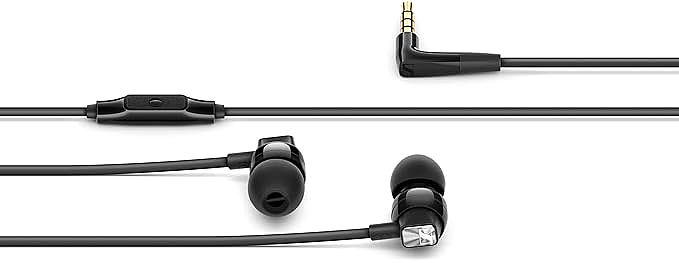
The dynamic drivers in the CX 300S are engineered for high responsiveness. The lightweight diaphragm reacts instantly to the voltage spike of a gunshot sound effect. This “fast” sound conveys the texture and impact of the game world.
* Tactile Audio: Good transient response makes audio feel physical. You “feel” the recoil.
* Information Clarity: In a chaotic firefight, fast transients prevent the audio mix from becoming a wall of mud, allowing you to pick out individual threat vectors.
The Comfort Factor: Endurance Engineering
Esports athletes and hardcore gamers play for hours. The “Clamp Force” of a heavy over-ear headset can lead to headaches, sweaty ears, and “dent head” (compression of the hair/scalp).
The CX 300S weighs a negligible 12 grams. Once the correct ear tip is selected, the device is supported entirely by the ear canal friction. There is no headband, no weight on the neck, no heat build-up around the ears.
This “invisible” form factor allows the player to enter a flow state. The hardware disappears. In a marathon session, comfort is a performance stat. If you aren’t adjusting your headset every 10 minutes, you are focused on the game.
Versatility: The Switch, The Deck, and The Mobile
The 3.5mm jack is the universal language of gaming. The CX 300S works instantly with: * Consoles: PS5 and Xbox controllers (plugging directly into the controller). * Handhelds: Nintendo Switch and Steam Deck. * VR: Oculus/Meta Quest (where bulky headphones are a nightmare). * PC: Laptops and Desktops (via extension if needed).
Unlike USB headsets that require drivers, or wireless headsets that need specific dongles for different consoles, the CX 300S is platform-agnostic. It is the Swiss Army Knife of gaming audio. The integrated microphone, while simple, provides clear voice comms without the need for a boom mic hovering in your peripheral vision.
Conclusion: The Professional’s Choice
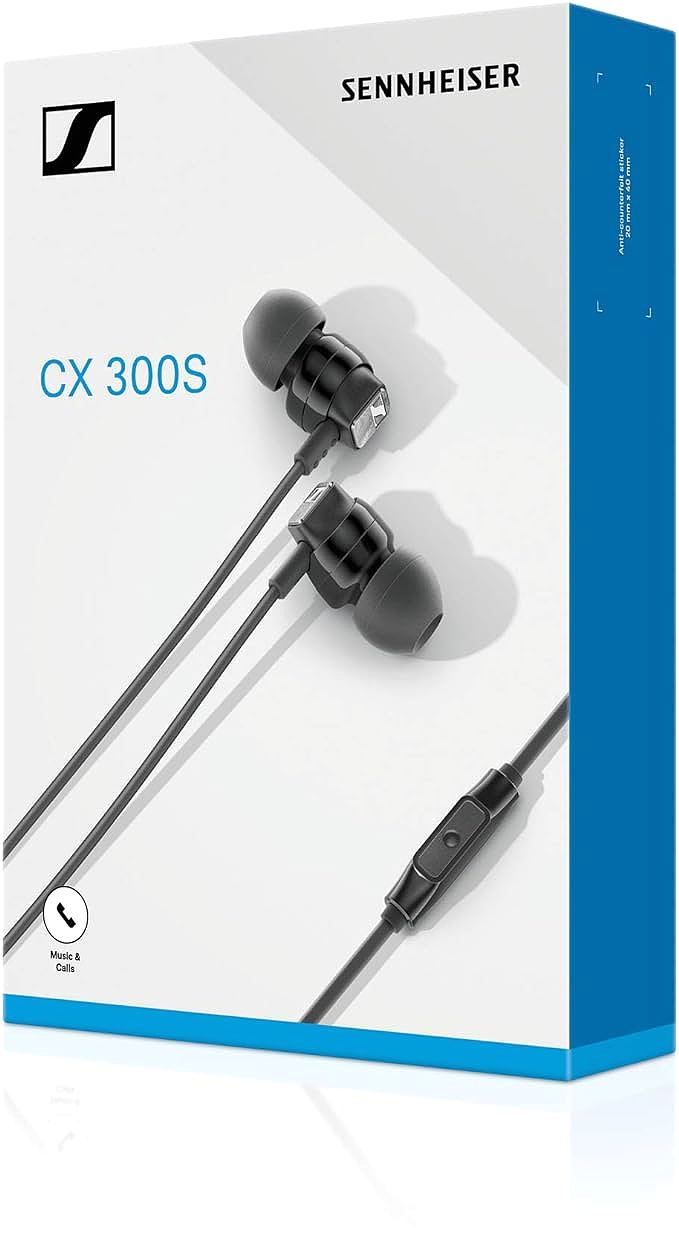
The Sennheiser CX 300S was not built for gamers. It has no LEDs, no “Game Mode,” and no aggressive branding. And that is exactly why it is perfect for gaming.
It was built for High Fidelity. And in gaming, fidelity means information. It means hearing exactly what the game engine is rendering, exactly when it happens, without coloration or delay. By choosing a tool designed for audio purity, gamers gain a competitive edge rooted in the physics of sound rather than the hype of marketing. It is the secret weapon hiding in plain sight, proving that sometimes, the best gaming headset isn’t a headset at all.