The Definitive Guide to IPX7 for Fitness: Decoding Unbreakable Waterproofing and Bluetooth 5.3 Stability
Update on Dec. 18, 2025, 1:23 p.m.
Welcome to the ultimate tech-check for the active lifestyle. I’m your mentor, and if you’ve ever powered through a tough workout only to find your music cutting out or—worse—your earbuds slowly dying from a siege of sweat, you know the frustration. Your audio gear needs to be as tough and reliable as you are.
Choosing the right sport earbuds isn’t about the biggest logo; it’s about understanding the scientific standards that guarantee their survival. We’re going beyond marketing claims to decode the two most critical pillars of truly unbreakable workout audio: the physical protection of the IPX7 rating and the invisible armor of Bluetooth 5.3 stability.
Pillar I: The Water-Tight Guarantee—Why IPX7 is the Gold Standard
The first element your earbuds have to conquer is your own body. Sweat is not just water; it’s a saline, slightly corrosive solution. This is where the IP (Ingress Protection) Code comes in. It’s not a suggestion; it’s a globally recognized standard set by the IEC (International Electrotechnical Commission), specifically IEC 60529.
If you look at the common IP ratings, you’ll usually see ‘IPX4’ or ‘IPX5’. But for serious, long-term athletic use, we need to focus on IPX7.
IPX7 vs. IPX4: The Sealing Science
The ‘X’ means the device wasn’t explicitly tested for solid particle (dust) protection, but the second number, the ‘7’, is a game-changer.
- IPX4 (Splash-Proof): Protected against splashing water from any direction. Think of this as a raincoat. It’s fine for light rain or a gentle sweat, but the seal is not designed to withstand pressure or saturation.
- IPX5 (Water Jet Resistant): Protected against low-pressure jets of water. This is an improvement, handling heavier sweat and rain, but still vulnerable to sustained saturation.
- IPX7 (Temporary Immersion-Proof): Protected against temporary immersion in water up to 1 meter (3.3 feet) for 30 minutes.
This is the crucial difference: To achieve an ‘X7’ rating, the device must have a fully sealed housing, often using robust polymer gaskets or special acoustic mesh over the drivers. This seal is not just about keeping drops out; it’s about maintaining the integrity of the acoustic chamber under pressure.
The Enemy is Salt: Sweat contains sodium and chloride (salt). When this salt-laden moisture breaches a weak seal (like an IPX4), it doesn’t just evaporate; it crystallizes on the delicate micro-circuitry and magnetic components, leading to corrosion and component failure over time. IPX7 is your defense against this invisible chemical attack. It ensures the sealing material is robust enough to withstand years of saturated, saline exposure.
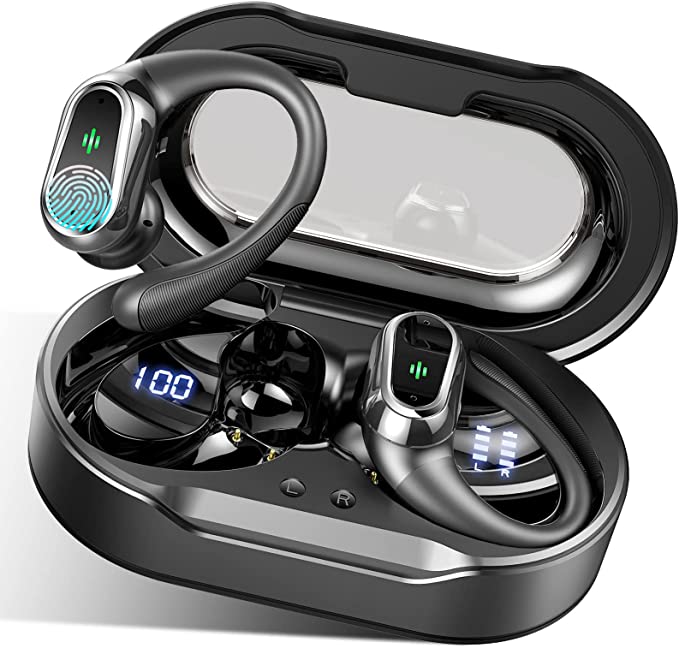
As a case in point, the Rulefiss Q38 Wireless Earbuds feature an IP7 Waterproof rating. This high level of protection is your guarantee of survival against a sudden downpour, a marathon’s worth of sweat, or even an accidental drop into a water hazard, providing genuine “Workout Peace of Mind.”
The Limitations of IPX7 (A Mentor’s Warning)
No seal is truly invincible. The IPX7 rating is a laboratory certification with two key limits you must respect:
- Depth and Time: It’s tested for 1 meter for 30 minutes. Don’t take them scuba diving.
- Temperature and Steam: IPX7 does not mean the earbuds are protected against steam or sustained high temperatures (like a sauna). Steam, as a gas, has molecules small enough to compromise polymer seals designed for liquid pressure. Always keep your IPX7-rated gear out of the sauna or steam room.
Pillar II: The Unseen Engine—Harnessing Bluetooth 5.3 for Unwavering Connection
Protecting your gear from the elements is only half the fight. The other half is the invisible war against wireless interference and latency. When you’re at a busy gym, your signal is competing with dozens of other devices, Wi-Fi, and electronic noise.
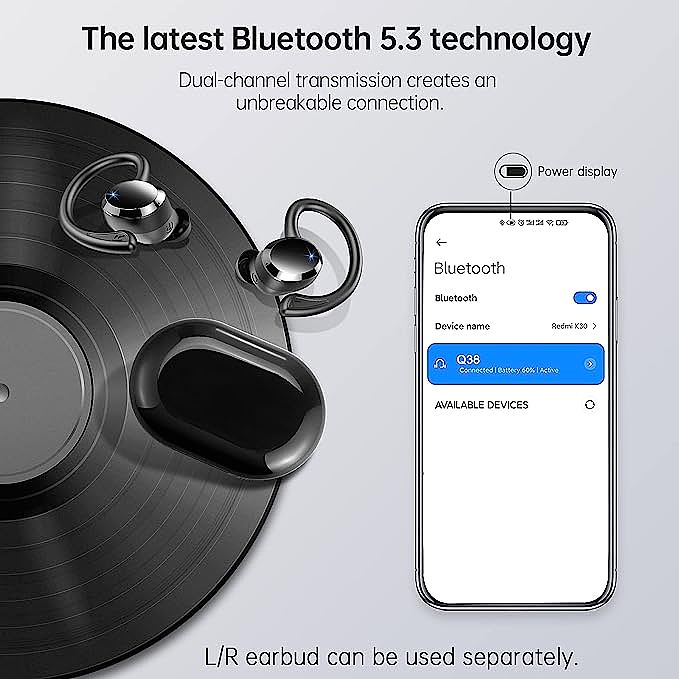
The advanced Bluetooth 5.3 technology, featured in devices like the Rulefiss Q38, is an invisible engine designed to win this war.
1. The Congestion Battle: Stability and Signal Integrity
Think of wireless signal transmission as a multi-lane highway. Older Bluetooth versions struggled when the highway got crowded. Bluetooth 5.3, governed by the Bluetooth Special Interest Group (SIG), employs a refined technique called Channel Classification.
- Smarter Routing: Essentially, Bluetooth 5.3 allows the earbud’s chipset to much more quickly and intelligently identify congested or ‘dirty’ radio channels (those full of interference) and instantly shift the transmission to a cleaner, less busy channel. This proactive signal management dramatically reduces the incidence of audio dropouts and stuttering, especially in wirelessly saturated environments like commercial gyms or crowded running trails.
2. Latency Explained: From Sync to Performance
Latency is the tiny time delay between your phone sending the audio signal and your earbud playing it. While a delay is fine for listening to music, it cripples your experience when watching video or relying on immediate audio feedback.
- The Latency Threshold: Human perception generally notices a significant delay when the latency is above 30–40 milliseconds (ms). Bluetooth 5.3 technology, often coupled with new audio profiles like LE Audio, is engineered to keep this delay as low as possible.
- Performance Impact: If you’re using an app to guide your yoga or lift form, or watching a tutorial, low latency means the instructor’s voice and movements are perfectly synchronized. This seamless sensory input is crucial for maintaining flow and preventing distraction.
The Physical Blockade: Even with a fast connection, your body—a large, salty, water-filled mass—is a surprisingly good signal blocker. When you turn your head sharply during a lift or shift your phone to a pocket opposite the controlling earbud, the signal has to pass through more tissue. The robust transmission power and stability protocols of Bluetooth 5.3 are better equipped to maintain the connection through these common physical obstructions.
The Q38 Case Study: Sound and Security
Beyond its foundational IPX7 and Bluetooth 5.3 technologies, the physical architecture of a sport earbud must also be optimized for high-intensity use.
The Role of the Earhook Design
The adjustable and secure-fit silicone earhooks on the Q38, and similar sport earbuds, are a direct response to the movement challenge. They are a superior anchor point compared to simple friction-fit designs.
- Force Distribution: The hook distributes the downward force and movement impact across the larger, more rigid outer ear structure (the pinna), rather than relying solely on the soft tissue of the ear canal. This prevents the constant need for readjustment, keeping the earbud comfortably firm in place during any explosive movement. This secure fit is not just about comfort; it’s a critical component of Passive Noise Isolation (PNI) and maintaining the IPX7 seal’s integrity during activity.
The Power of 10mm Drivers
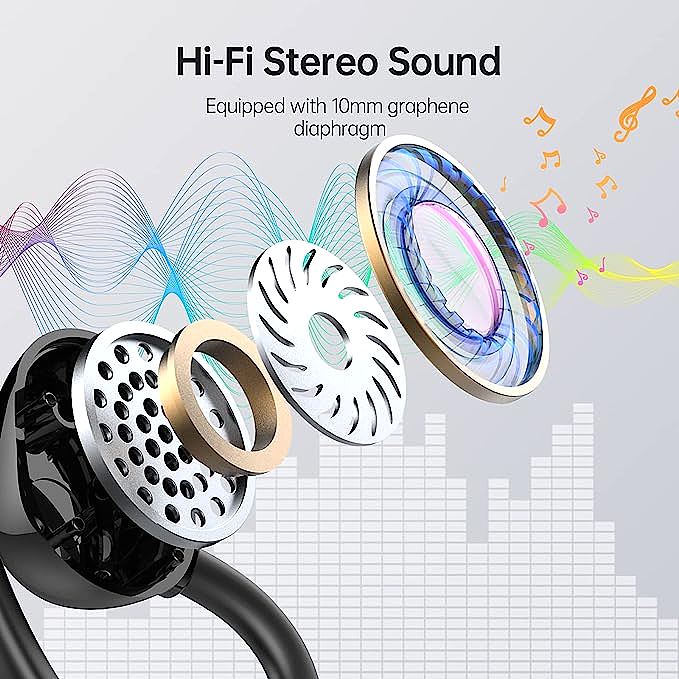
The Rulefiss Q38 uses 10mm high-efficiency speakers. This physical size is vital for achieving the claimed “bass more punchy” sound signature. A larger diameter diaphragm can move a greater volume of air, which is the physical requirement for reproducing deep, resonant low-frequencies that provide the motivational rhythm for your workout.
Practical Longevity Checklist: Simple Maintenance for Unbreakable Gear
Even with IPX7, user maintenance is mandatory for longevity. Here is your quick guide for keeping your sport gear like new:
- Immediate Post-Workout Wipe-Down: After every sweat-heavy session, immediately wipe the entire surface of the earbuds and the silicone hooks with a clean, dry cloth. Do not use chemical cleaners or soap, as they can degrade the polymer seals.
- The Magnetic Touchpoint Test: The most common cause of charging failure is the oxidation or grime buildup on the small, gold-plated magnetic connectors in the charging case and on the earbuds. This blocks the electrical current.
- Action: If your earbuds stop charging, use a cotton swab lightly dampened with isopropyl alcohol to gently clean these connectors on both the earbuds and inside the case slots. This is the expert fix for restoring reliable charging.
- Respect the Charge Cycle: To maximize the lifespan of the Lithium Polymer batteries (e.g., the 800mAh case and the earbuds), avoid letting the case sit at 0% for extended periods. Charge the case at least once a week, even if you haven’t used it.
By understanding the science behind the IPX7 seal and the Bluetooth 5.3 connection, you are no longer a victim of hardware failure. You are an informed consumer demanding—and getting—scientifically-backed, unwavering performance. Choose knowledge, choose resilience.